
Pumpkin Spice and Everything Nice: Meet the Eastern Red Bat
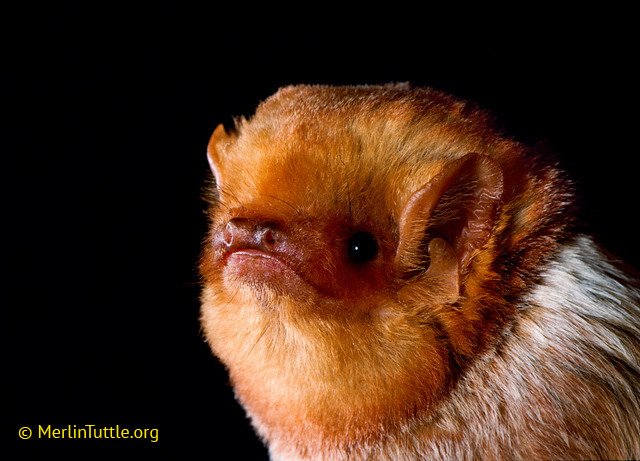
Happy fall! With pumpkin spice season around the corner, I wanted to focus on our pumpkin-colored bat species: the eastern red bat. They are one of 11 species of bats documented in Maryland and are one of the more common ones you can see around Maryland.
Eastern red bats are known as ‘tree bats’ since they often roost in trees either as a solitary bat or as a small family group. They also are not true hibernators like our brown bat species, preferring to go into short-term periods of inactivity known as torpor when the temperatures dip and cause food to become scarce. Eastern red bats sometimes will overwinter under leaf litter, particularly from oak trees, or will spend much of the winter under tree bark or other covered areas. They can survive temperatures as low as 23 degrees F and can wake up from torpor to hunt on warm, winter days. Some eastern red bats decide to ditch the cold and migrate south to places like Costa Rica for the winter.
Locally, all bat species in Maryland are insectivores, meaning that their diet is entirely comprised of insects and other invertebrates like spiders. Eastern red bats are medium-sized bats in our locality, and they typically prefer to consume moths but also will dine on crickets, flies, mosquitoes, and beetles. Some estimates say that they can fly up to 40 mph to catch food and to migrate!
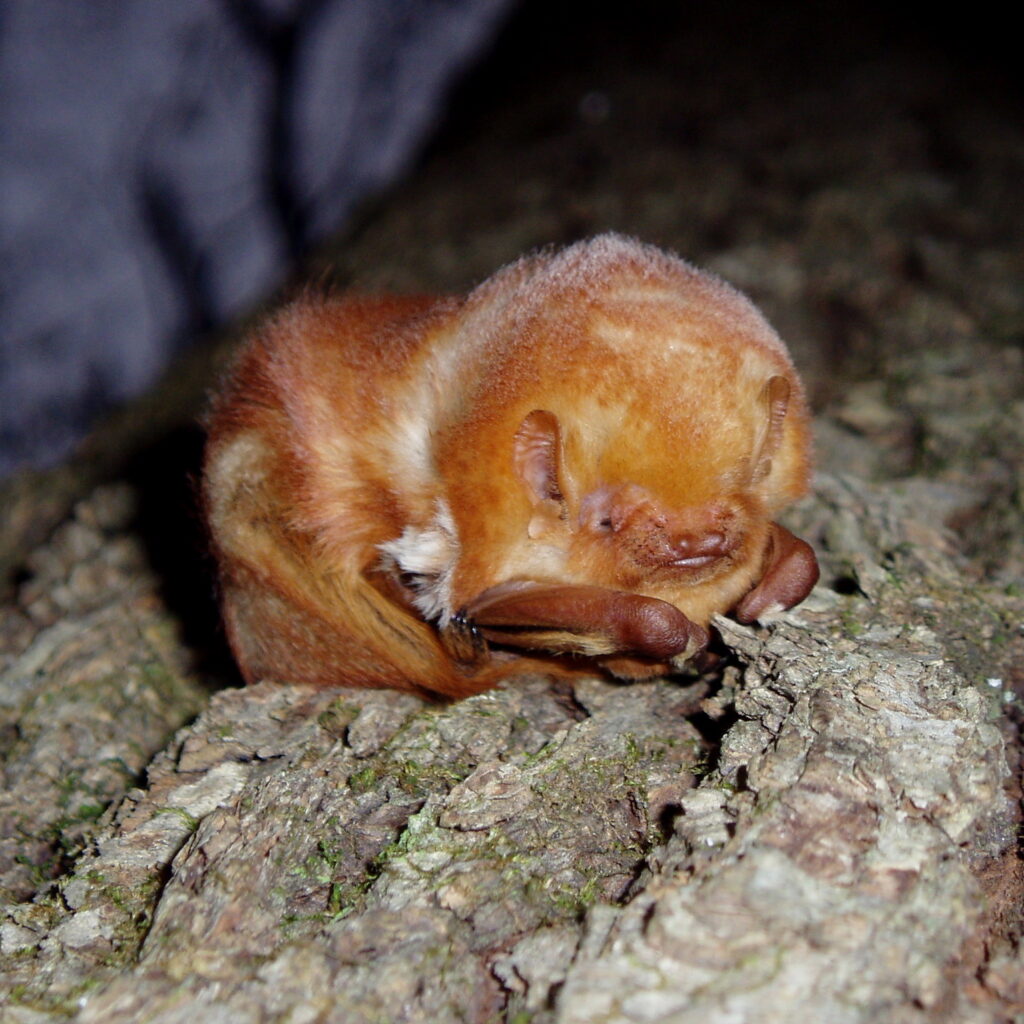
As mentioned earlier, eastern red bats have a reddish-orange appearance. Unlike many other bat species, you can distinguish males from females based on fur color patterns. Males are described as having “Irish Setter Red” coloration while females sport some white frosting to give them a slightly muted color. As tree bats, they also have a fully furred tail which they will curl up with when the weather gets cold. Their coloration helps them camouflage as dead leaves hanging on trees. So, take a second look if you ever notice an extremely “furry” leaf while hiking around.
Eastern red bats are one of Maryland’s fascinating nighttime neighbors. With migration season happening now, it’s important to remember that nighttime lights can disorient not only bats but also migrating birds. By turning off porch lights during peak migration—or setting them on motion sensors or timers, you can make a big difference for these travelers of the night sky.
Unfortunately, most of our bat species in Maryland are struggling. Want to go the extra mile for bats right here at home? Try leaving leaf litter in your gardens and around trees through the winter (perfect bat-friendly habitat!), reducing insecticide use, and keeping dead trees (known as snags) that are not a threat to people, pets, or property.
Think of it this way: a darker, leafier yard isn’t just cozy—it’s a five-star bat hotel.