She is beauty, She is Grace: A Wasp Story
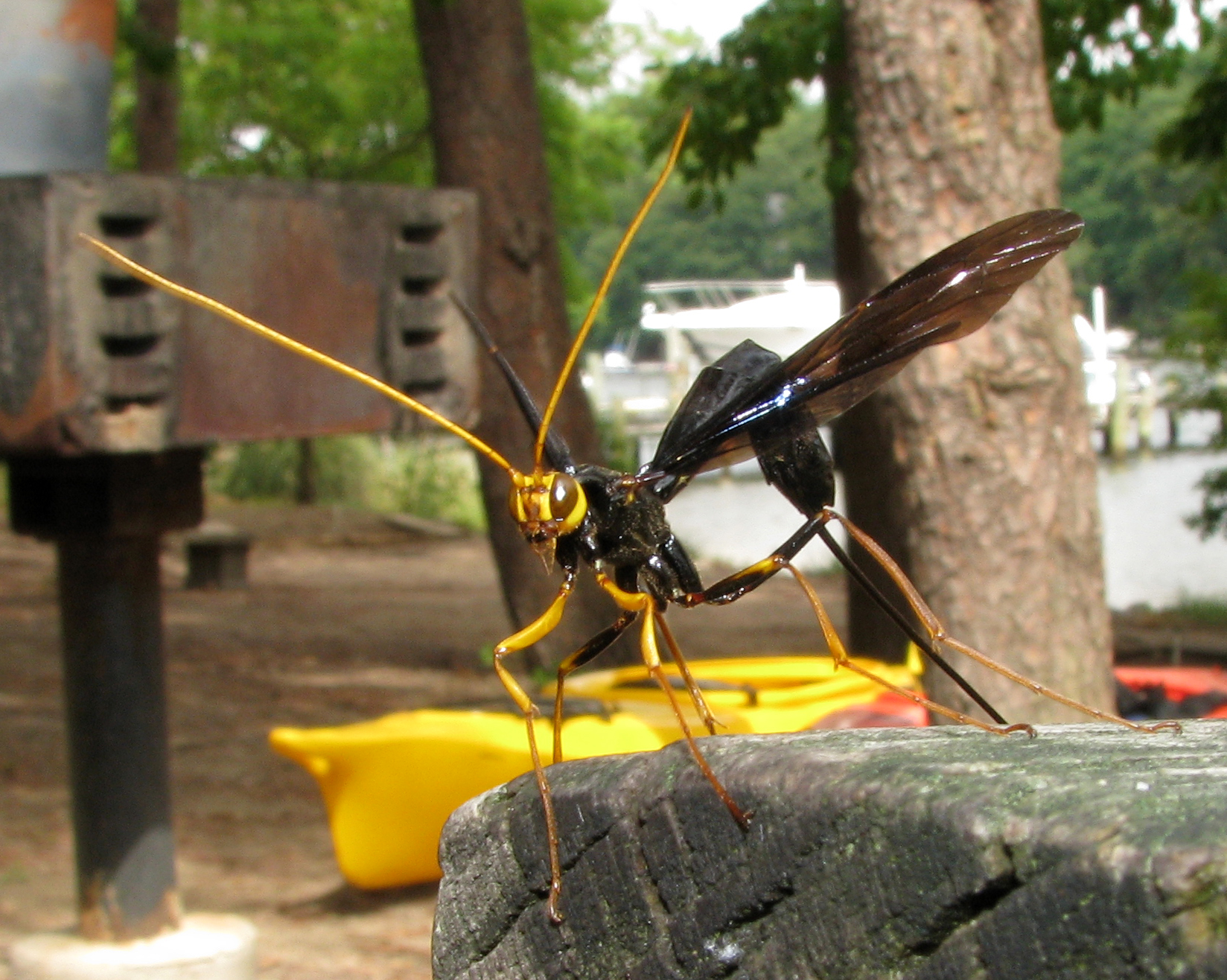
The first time I saw a giant ichneumon wasp (Megarhyssa atrata), I was torn between two worlds. On one hand, my (now) husband and I were still dating, and he had invited me to his annual neighborhood beach party, a gathering of people I didn’t fully know. On the other hand, there she was in ALL her glory, trying to oviposit into the picnic table.
For most people, this scene looked like the opening act of a horror movie. A giant wasp with an even longer stinger drilling into wood?! Nightmare fuel.
For me? It took every ounce of self-control not to squeal with too much excitement.
Thankfully, I managed to document her without completely alarming everyone else. Dan and his friends still stuck around, and over the years they’ve embraced my role as the crazy biologist in our social circle. Honestly, it was probably a useful test for my relationship with Dan.
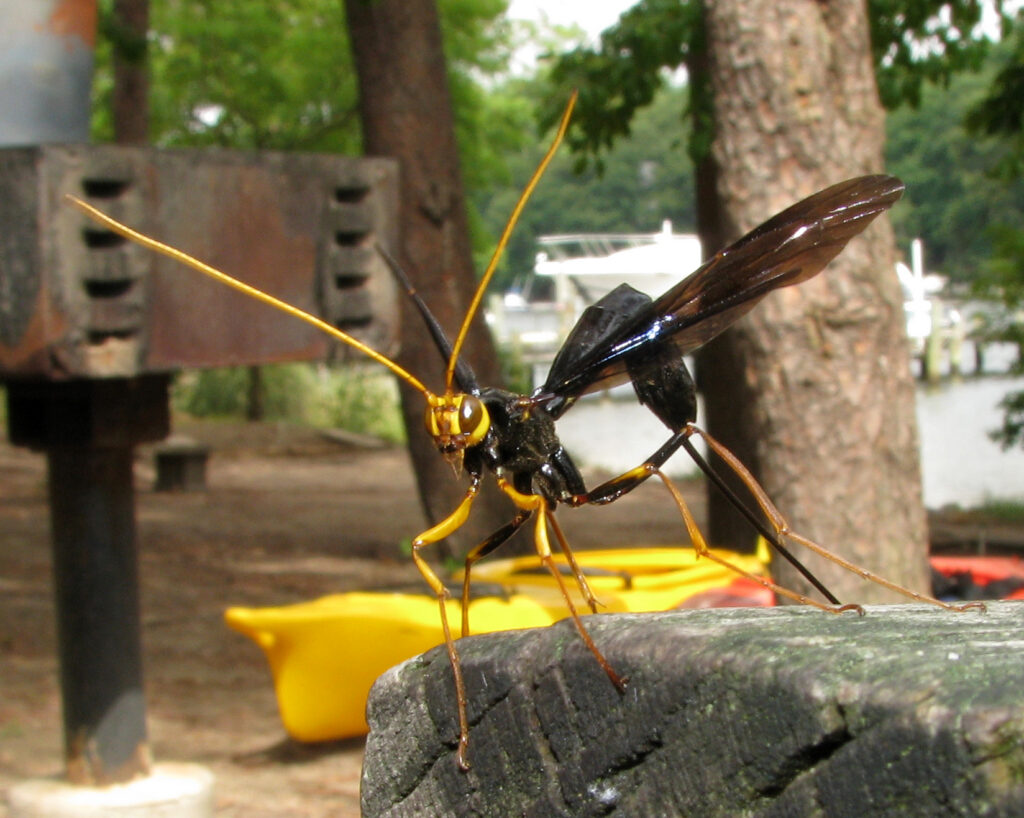
The giant ichneumon wasp is one of four species in the Megarhyssa genus in North America and one of three found in Maryland. Megarhyssa wasps parasitize the pigeon horntail (Tremex columba) which is a wood wasp whose larvae feed off decaying wood. The relationship is fascinating and specialized. The pigeon horntail lays her eggs in wood and introduces wood-digesting fungi (e.g. Amylostereum) in the process. The fungi break down the wood which the developing larvae feed off, but the fungi’s chemical signatures also help Megarhyssa wasps locate the horntail larvae.
Once the female Megarhyssa wasp detects her target, she will position herself on the outside of the wood and will essentially use her ovipositor to drill in until the it reaches the horntail larvae. From there, she will inject venom into the horntail larvae and attach her egg to its outside. The egg eventually hatches, and the subsequent larvae eat the horntail alive. Here’s a video from PBS.
Ok, so maybe they are nightmare fuel… especially for horntails! Charles Darwin once wrote to Asa Gray (prominent North American botanist), “I cannot persuade myself that a beneficent & omnipotent God would have designedly created the Ichneumonidæ with the express intention of their feeding within the living bodies of caterpillars, or that a cat should play with mice.” I love this quote and use it in every wasp presentation I provide.
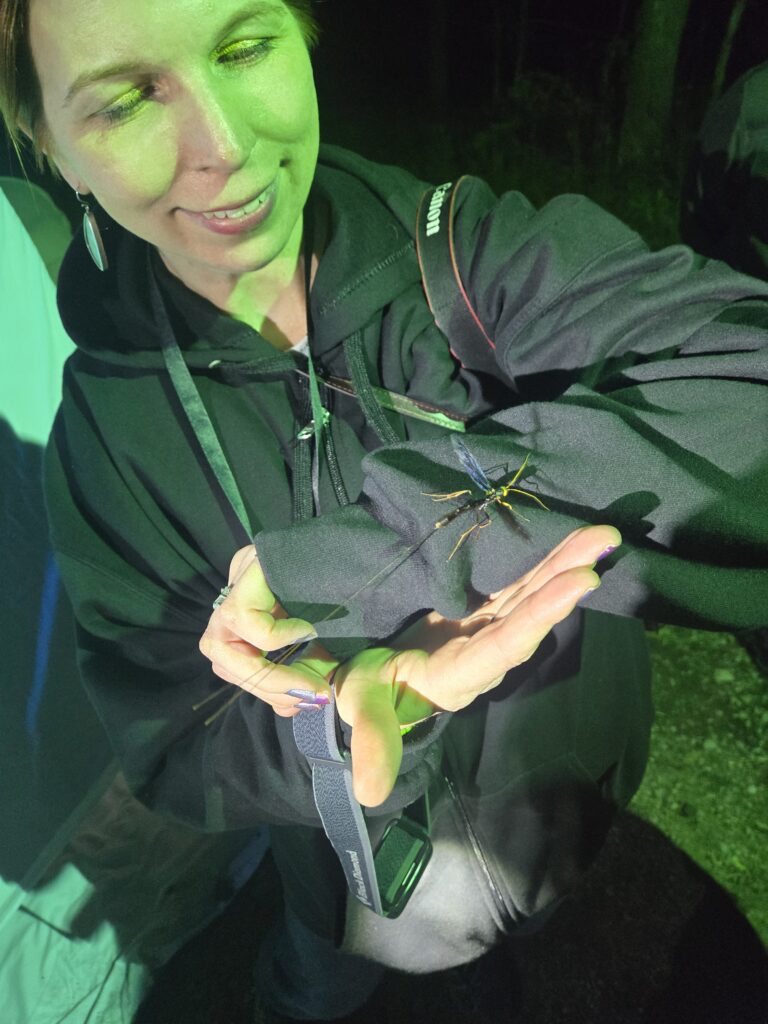
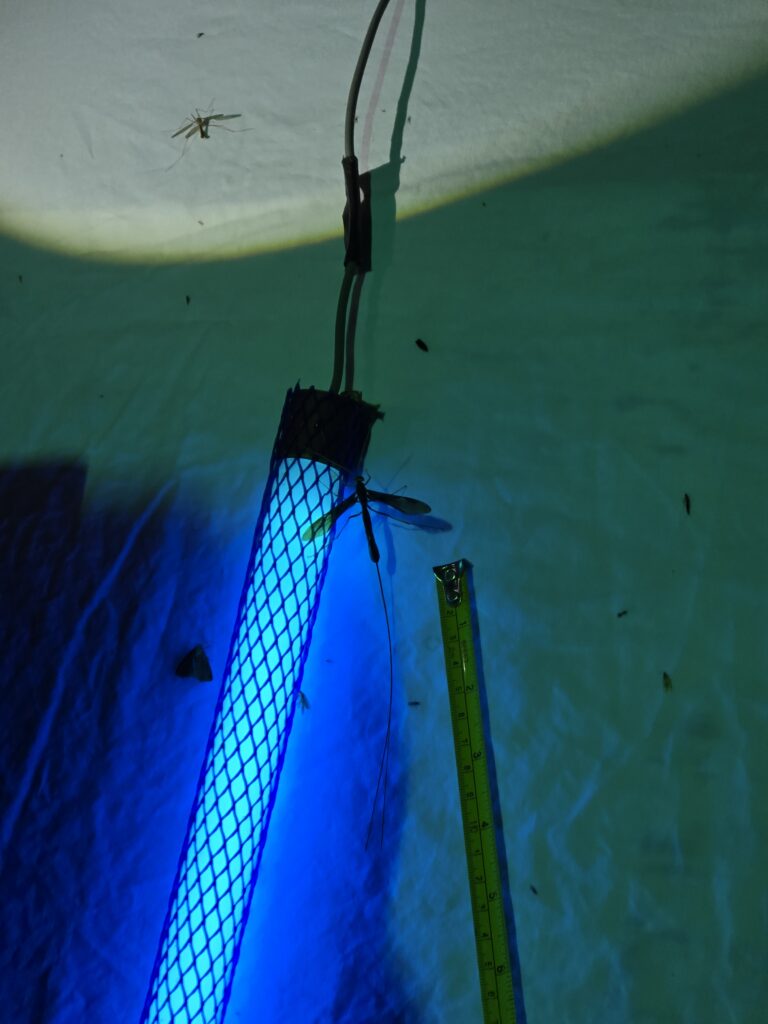
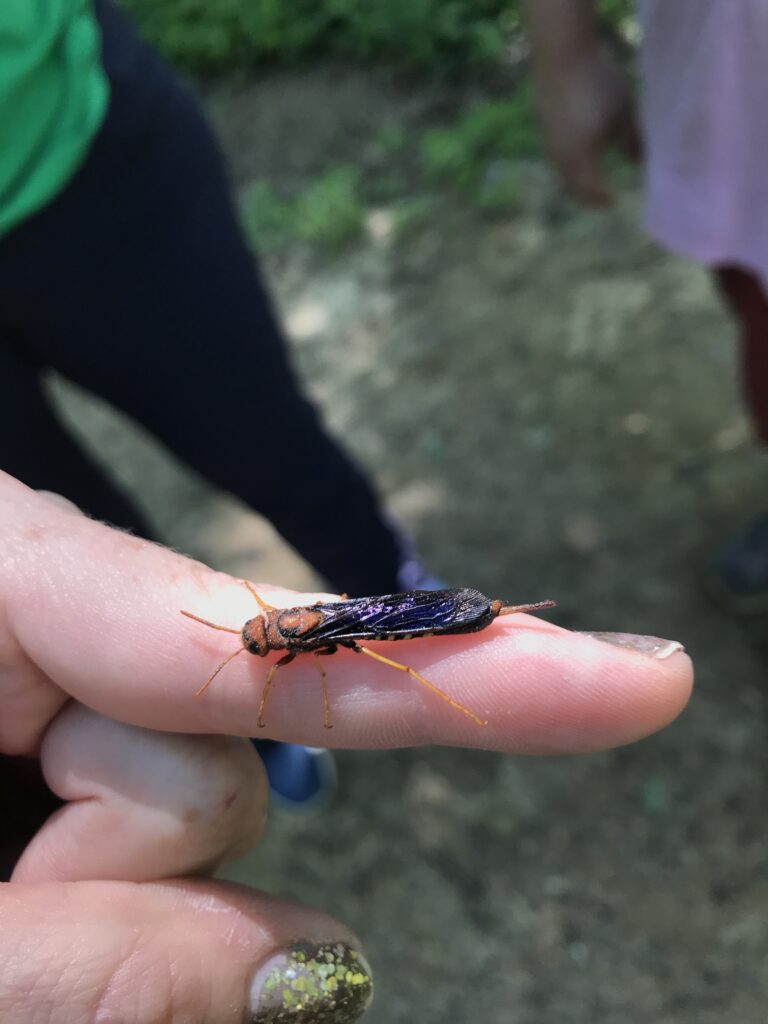
In all of my years, I have only seen that one giant ichneumon wasp until our naturalist weekend in Garrett County last month. Finding this lovely wasp with other nature nerds was a wonderful experience, and of course, I had to hold her to show how docile they are. (For the record, she couldn’t sting me even if she wanted to). I hope these stories help you to see what amazing creatures exist in our midst.