
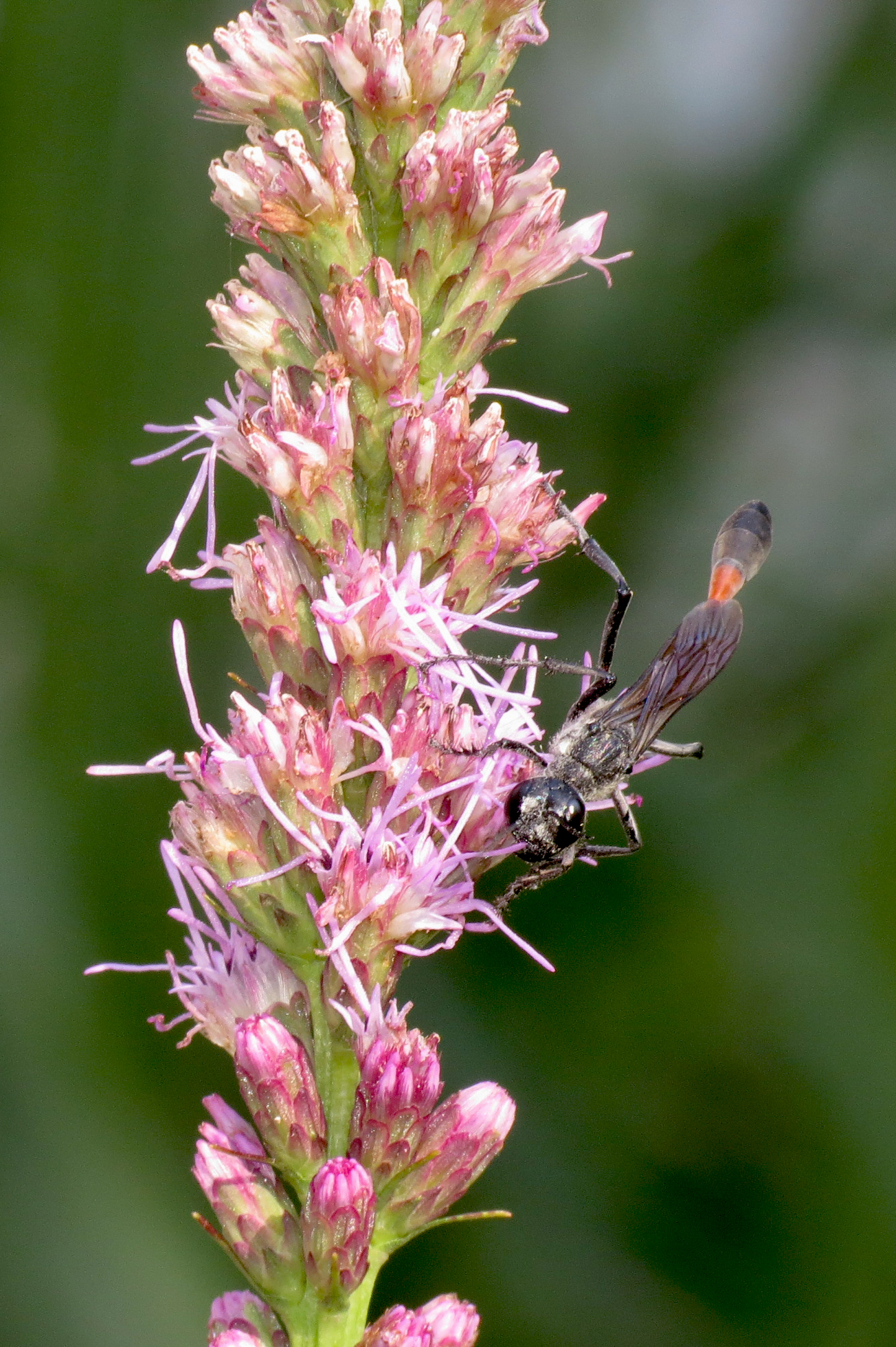
Learning to Love Wasps
I’ll admit; I was once part of the kill-it-with-fire camp when it came to wasps. I had several bad encounters with yellowjackets and that turned me off. However, when I started teaching about gardening for wildlife, I started to find bits of wasp information pop up here and there. The braconids, for example, are well known to gardeners as those “rice grains” that kill hornworms on tomato plants. Or, people would notice the far-out galls from wool sower wasps and would have questions. I started watching birds peck open galls to grab juicy grubs, and one woman came up to me after a pollinator talk to tell me a story about this captivating wasp that pulled spiders into her underground lair. I decided I should educate myself more to be able to better teach people about wasps in the garden.
I wasn’t prepared.
What it Takes to Be a Wasp
Wasps are Hymenopterans, a large group of insects that includes sawflies, wasps, bees, and ants. Wasps are in the narrow-waisted suborder Apocrita. The tiny waist is what helps to separate them, physically, from their bee cousins. They also tend to be less hairy but not all the time. To date, over 1,600 species of wasps have been documented in Maryland. Hornets are a type of wasp, generally with a thicker body in the genus Vespa. In fact, the largest wasp in the world is believed to be the Asian Giant Hornet (Vespa mandarinia).
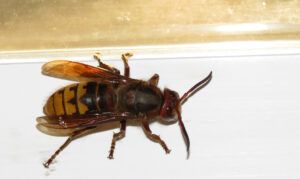
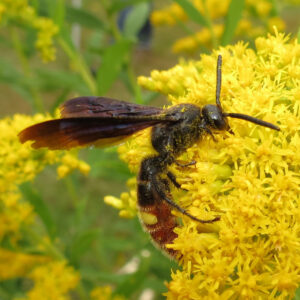
The European hornet is our largest wasp in MD
Why Care About Wasps
Wasps are pollinators, predators, seed dispersers, decomposers, and architects. Despite being such a large group of insects, they are relatively understudied and definitely underappreciated. What overshadows the benefits of most wasps are the social wasps which make up roughly 3% of the 150,000+ species worldwide that get testy when you get close to their nests and babies (for good reason). As a society, we accept honeybees which do the same thing, and by some estimates, more people are stung by bees in the US than wasps.
Wasp pollination is poorly researched, but a recent review paper found evidence of wasps visiting 960 plant species, including 164 species that are completely dependent on wasps for pollination. Some of those wasp-dependent plants were orchids like the hammer orchid I love to talk about in pollination programs.
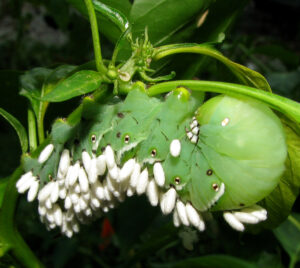
Researchers have found that globally, we receive $417 billion a year in biocontrol services from insects. Much of this benefit comes from invertebrates, particularly parasitoid wasps, which make up nearly half of the species used in commercial biological control programs. However, these figures often overlook or undervalue the broader contributions of wasps—especially non-parasitoid (aculeate) species, despite their significant role as predators and natural pest managers in ecosystems. Local examples of parasitoid wasps include the Braconid wasps (Cotesia congregata) that go after hornworms on tomato plants and the parasitoids that go after the invasive emerald ash borer.
When I give talks on wasps, my signature phrase is: there’s a wasp for that. Why, you ask?
- Got aphid problems? There’s a wasp for that.
- Got spider problems? There’s a wasp for that.
- Got roach problems? There’s a wasp for that.
- Got wasp problems? There’s another wasp for that.
- Spotted lanternflies? Yes, of course, there is a wasp for that.
Finally, there is the medical aspect of what we have gained by studying wasp systems. Here are few tidbits of research:
- MIT engineers repurpose wasp venom as an antibiotic drug
- Wasp venom-based therapy for breast cancer in development
- Wasp Venom Toxins as a Potential Therapeutic Agent
Why I Love Wasps
My love story for wasps started with the information above on how useful they are to us. However, wasps, like other animals, should also be allowed to exist and not always give back to humans to prove their worth.
I truly fell in love with wasps when I started learning about the diversity of the species here in Maryland and around the world. I also started watching them more and realized, like other animals, they would rather do their thing without my interference, and this included social species like yellowjackets.
Since I don’t want to overwhelm folks with wasp stories, I am going to end this blog with the promise that more content is coming. I hope to spend some time writing about different wasp groups and highlighting species of interest. In the meantime, you can also read my prior blog on A Better Guide to Yellow, Stripey Things.

Fay Walton
This is awesome to find some who sees and understands them as I have grown to do! Once I understood they they just want to survive and protect their family, I rarely get stung. Thank you!
kwixted0
Thank you! It’s nice to find a fellow wasp lover. 🙂 Unfortunately, I have had a number of paper wasp stings lately, but I still appreciate them. I remember the last time I got stung, my husband yelled out the door: SHE’S YOUR FRIEND! LOL.