Jewels of the Wasp World
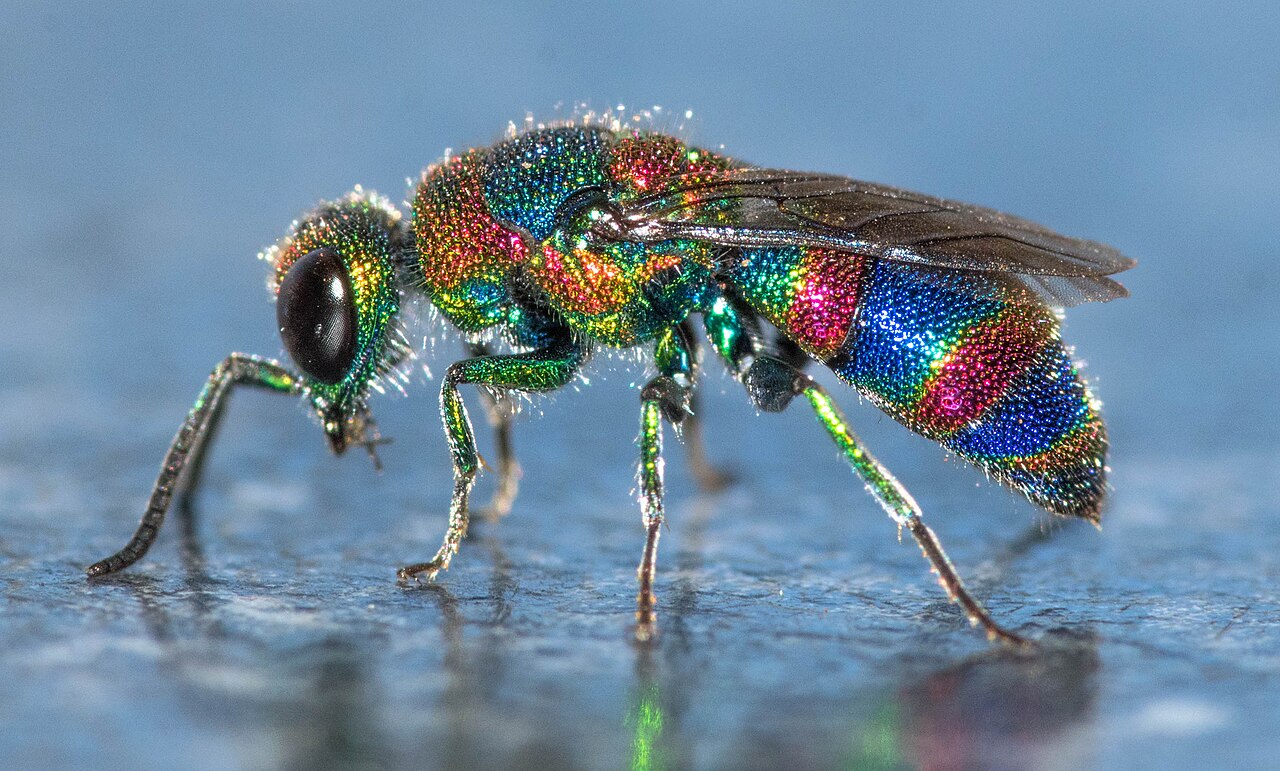
One group of wasps that captivated me early on are the Chrysididae, or cuckoo wasps. They are jewels of the wasp world, adorned with metallic colors that seem to iridize with light along the pitted design of their exoskeleton. Their colors are complex and are created by light refracting through open spaces between six layers of cuticle in their exoskeleton.
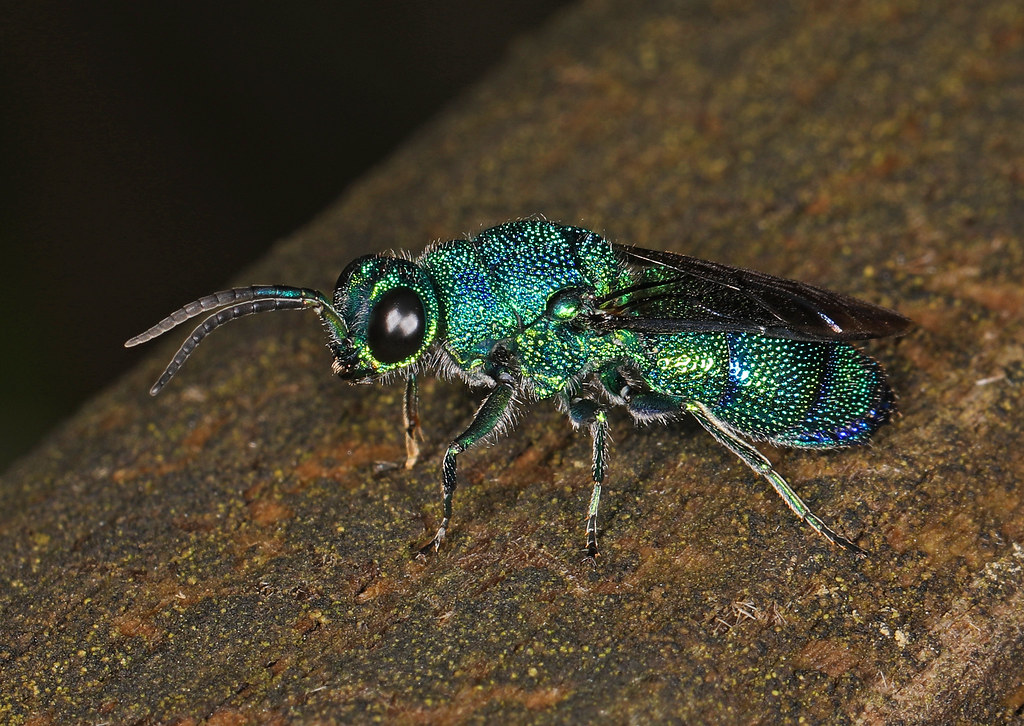
The reason for cuckoo wasp’s iridescence isn’t fully understood, but part of it might be due to their general lifestyle as kleptoparasites (nest parasites). You see, cuckoo wasps get their collective common name from parasitizing other bee and wasp nests by laying their brood in another species’ nest and walking away. [Some species in Asia will also parasitize walking stick nests]. Female cuckoo wasps will observe other female wasps setting up nests and will either sneak in to lay her eggs or will hitch a ride on food being drug into the nest. If they get caught by the other mother, they roll into a defensive ball and rely on their dense exoskeleton to protect them. It is believed the light refraction on cuckoo wasp’s exoskeleton helps provide a type of camouflage from other Hymenoptera. The light refraction might also aid in buffering heat.
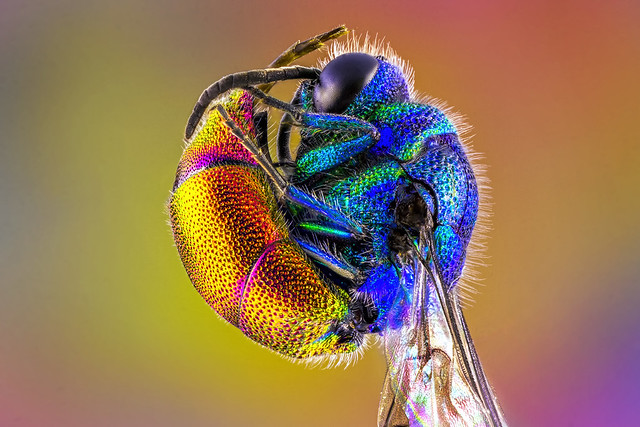
If the cuckoo wasp eggs aren’t discovered, then they will hatch and feed on the food left by the host wasp’s mom and/or will turn to eating the host larvae. When feeding on the host larvae, the cuckoo wasp will attach to its back with sharp mandibles and feed off the host’s life juices. Some reports have mentioned that if the host is not dead or too weak, they will even spin a pupal case AROUND the offending cuckoo wasp host. In some cases, cuckoo wasps will parasitize other parasites, making them hyperparasitoids. It’s wild out there in the wasp world, folks!
A Colorful World of Cuckoos
Some of my favorite cuckoo wasp colorations are the Ruby-tailed Wasp (Chrysis ignita species complex) which are found in parts of Europe and Asia. As their name suggests, they have a magenta backend (abdomen) paired with stunning blue-green colors on their head and thorax. In southern Africa, the rainbow wasp (Chrysis mionii) has stunning bands of color ranging from magenta to blue and green.
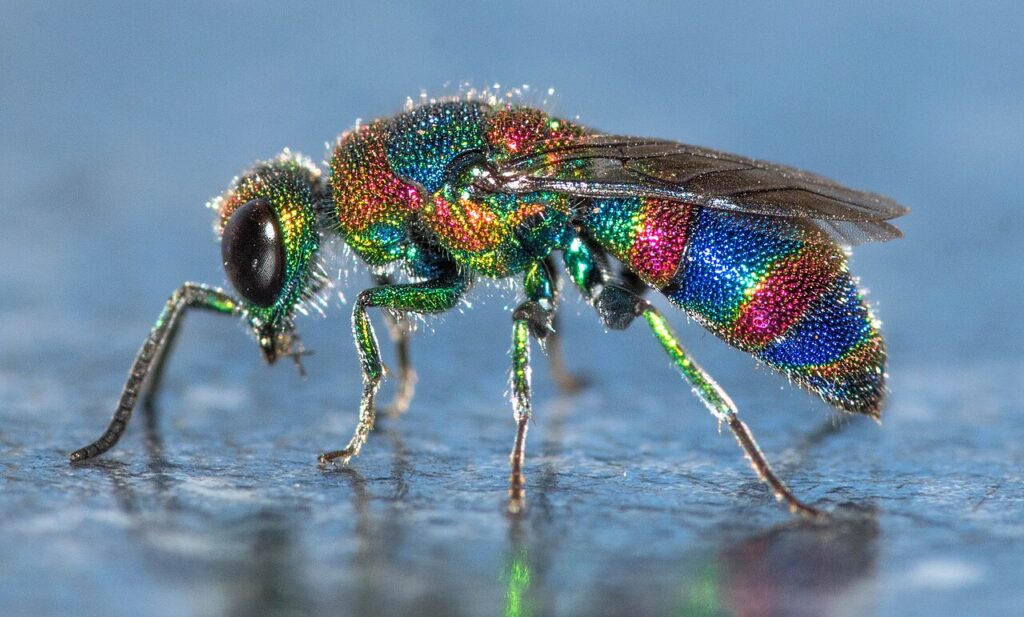
There are over 200 species of cuckoo wasps in North America, the majority of which are found in the west, particularly in California. As you might imagine, this group is relatively understudied like many of their wasp cousins. In Maryland, there are around 15 species in Chrysididae that have been documented, most of which are blue or greenish metallic in color. Like many other cuckoo wasp species, all of those found in Maryland are quite tiny. Most accounts also say that cuckoo wasps lack a functional stinger, therefore they are unable to sting.
As adults, it is reported that most cuckoo wasps feed on nectar and pollen. They also have been occasionally seen consuming honeydew (sugar-rich insect poo). Females are solitary, and they target specific hosts for their nests.
And, so, with that, you have now learned about the lovely but sneaky jewels of the wasp world!